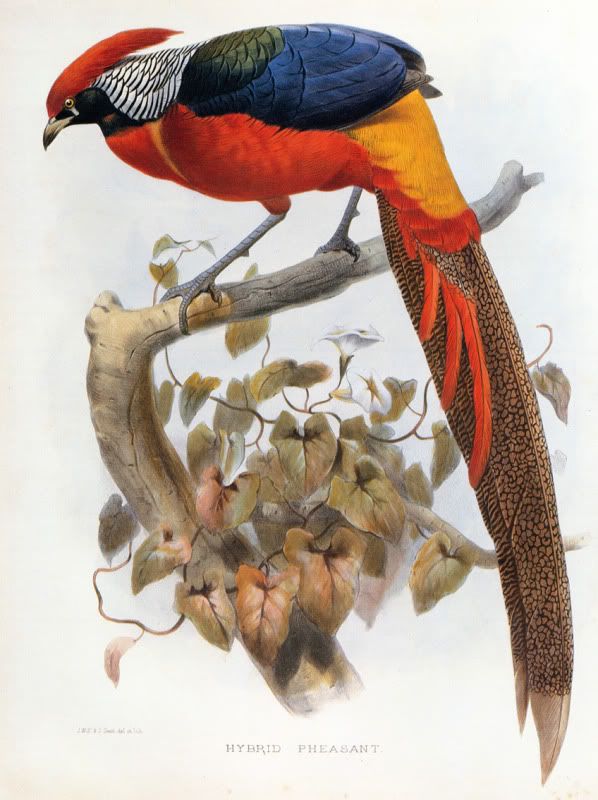
The issue that we hear most about in avicultural circles concerns hybrids between species like the Chrysolophus Pheasants- it is difficult to find a captive Golden without Amherst's blood and visa vis. This is also true for Pavo Peafowls. I don't think anyone can remember what an unpolluted Indian even looks like. They likely never knew that a non-crossed Green Peafowl existed.
Does this concern me. Yes it does. My reaction to the issue is oblige the keepers of hybrids to produce breed registries.
As these selective breeding specialists are focused on producing certain mutations of hybrids and are transforming wild species into domestic ones, they are ostensibly removing their hybrid stock from the wild species gene pools. There is no point in breeding new wild material into the stock when there are already so many hybrids clogging up the ethosphere. There can be no excuse breeding domestic breeds into wild species - this direction domestic into wild is the best way to bring a wild captive species to the brink of extinction as we are witnessing with the Indian Blue Peafowl, Golden Pheasant and Red Junglefowl.
As selective breeding enthusiasts share common objectives it stands to reason that they should be working in close cooperation with one another, much as we see in the
hybrid cat industry . A Savannah cat costs more than the wild ancestral progenitor species by a margin. Consequently, fewer Serval are kept. This is in the interest of the captive Serval population. There is a danger that domestic cat genes may be introduced into the captive Serval population. Fortunately, the cats are of such value, most will be studied exhaustively, including genetic work before being included in conservation breeding. The hybridologists are generating their own industry. They need to organize and distinguish themselves. They also bear the largest burden of responsibility of keeping their artificially selected stocks away from wild progenitive stocks. If they cannot take on this responsibility they deserve the withering attention they receive from the self-proclaimed purists. I've contributed to the hybrid industry. I'm not bragging about it. But the Bronze Spalding is one of the most astonishing creatures I've ever seen. It's art. I have no idea how the master selective breeders have arrived at such a masterpiece and am frankly surprised with how fond I am with it.
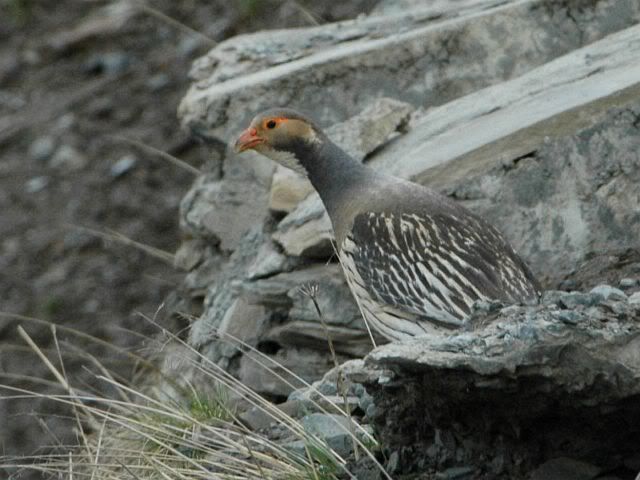
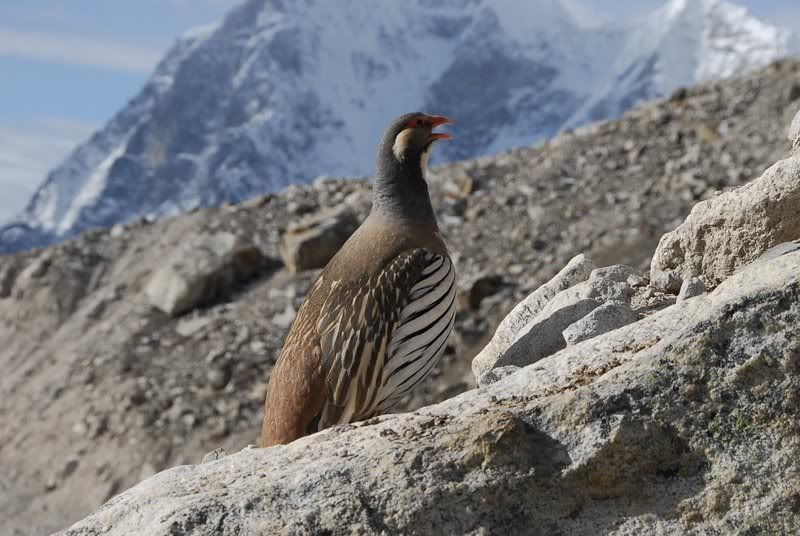
So too is the Yellow Golden a piece of art and the White Chukar, the Silver Philby Rock Partridge.
Obviously people have the right to keep and maintain these domestic hybrid mutations but they must shoulder the responsibility of keeping stocks entirely separate.
When one sees a bird described as a "black throated golden" that is actually an Amherst's hybrid (Look for green scaled plumage delineating the upper neck from the breast.)
you should know that the individual selling that bird is contributing to the problem. That "dark-throated golden", which is actually a crimson eclipse could well end up being bred back to red goldens as the dark throat is described as nothing more than a mutation of the red golden in literature. The average person will believe that the dark throat is a golden and so will end up lumping the stocks together further contaminating the red golden gene pool.
Moreover, there is evidence that a wild black throated golden may exist in northern Mongolia; further evidence points to amherst golden hybridization at the root of the mutation. We will probably not figure that out any time soon. Irregardless, keep the crimson eclipse away from the dark throat and both away from the red golden.
This is just common sense as well as decency.
Having the honour of never polluting the wild species with domestic blood is something few people can guarantee that they have. Having the honour of never perpetuating domestic mutation contaminated wild stock is another thing entirely. Don't do it and let those that do know that they are now on the proverbial chicken poop list.
In short, if someone picks up some eclipse pheasants ( crossed between amherst's and golden) at a swap meet, they should maintain them as eclipse and only breed the birds with other eclipses, being responsible and respectful enough to never breed the domestic hybrid with either wild parental species. They should create a breed registry or a pedigree for their lineages and encourage the individuals trading birds with them to do the same- and denying them if they refuse.
That's my opinion.
and no, I do not produce hybrid cats. I am not a member of the hybrid cat industry nor do I possess a single eclipse pheasant though I certainly have studied more than my share of study skins of them over the years. Don't consider this an endorsement to produce f1 eclipse pheasants please. As they exist, people should do something useful with them and keep them away from the parental species.